British Residency, @HYDERABAD-A symbol of love and fight for freedom
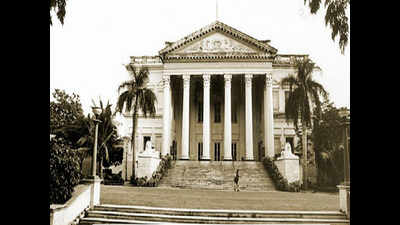
The British Residency building at Koti, which in 1949 was converted to the Women's College, stands as testimony to the heroic revolt of over 6,000 people against the yoke of the British rulers.


Led by Turrebaz Khan and Moulvi Alauddin, the rebellion was mounted against the then Resident, Colonel Cuthbert Davidson. After the revolt was crushed, The the 'Hyderabad Residency' also witnessed the travails and untold suffering of the survivors jailed on its premises. The spark for the revolt came after freedom fighter Jamedar Cheeda Khan was jailed on the Residency premises for revolting against the British. Turrebaz Khan and Syed Alauddin Hyder, popularly known as Moulvi Alauddin, organised the attack to free Cheeda Khan.
Turrebaz Khan was an ordinary youth from Begum Bazar with a patriotic bent of mind, while Moulvi Alauddin , wholed the Makkah Masjid, was fed up with the atrocities of the British rulers.
The attack was mounted on July 17, 1857, a Friday. People were coming out of mosques after the prayers and the rebels lay sudden siege to the British Residency .But the poorly armed group was overpowered within a few hours by the heavily armed British soldiers who were aided by the Nizam V, Afzal-ud-Dowlah.
The Nizam V had taken over the reins only two months earlier (May 16, 1857) and did not want to earn the wrath of the British rulers. After the revolt was suppressed, the British rewarded the Nizam and his minister, Mir Turab Ali Khan (Salarjung I), for the crucial support.
Turrebaz Khan was killed and his body hung outside the Residency . Moulvi Alauddin was the first Hyderabadi to be sent to the notorious Cellular Jail in the Andaman, where he died in torture. Both of them continue to be unsung heroes even after 160 years and are yet to be honoured officially as freedom fighters.
The revolt of 1857 was also the first time that a virtual bloodbath occurred at a building whose foundation stone was laid on love five decades earlier in 1803. It was a building that had transcended all barriers of religion, nationality, language and social status.The reason: It was gift of love by the second British Resident, Major James Achilles Kirkpatrick, to Khairunnisa, a Hyderabadi woman he married. Kirkpatrick stayed at the palace, which subsequently served as the official residence of the British Resident or ambassador till the end of the foreign rule.
The magnificent building, a heritage structure, was partly restored last year. But it needs more money for a complete restoration. And while the British Residency waits for a time it will be restored to its former glory , the heroic tales of Hyderabadi freedom fighters continue to silently echo from its walls, grand columns and royal halls. The Residency building needs to be protected not just for its heritage value, but also to perpetuate the selfless sacrifices of our own heroes.
About the Author
Syed Akbar is a senior journalist from Hyderabad. He is a specialist-journalist in science, technology, health, politics, environment, development, wildlife, religion, communities, and consumer affairs. He has been in the profession for the last 24 years. Before joining The Times of India, he worked with Deccan Chronicle and Indian Express.
End of Article
FOLLOW US ON SOCIAL MEDIA
